Style guide12 min read
Latest Anarkali Frock Designs for Girls
A full guide to the Anarkali frock designs girls are actually wearing this season: the silhouettes, the fabrics that hold a flare, gota and tilla work explained, the colours that photograph well, how to measure for a full-length frock, and what suits a Barat, a Walima, a Mehndi or Eid.
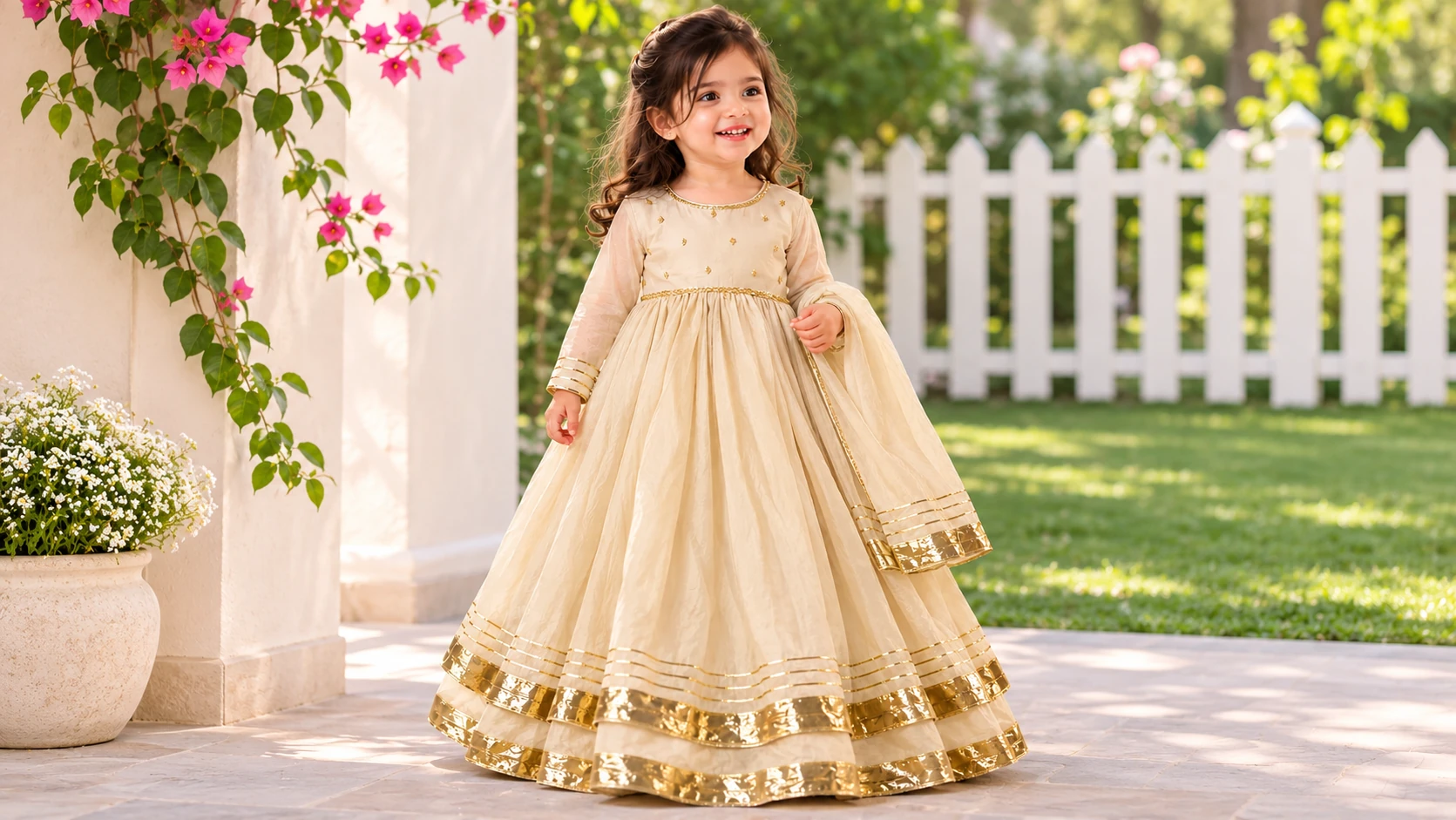
The Anarkali has outlasted nearly every other shape in Pakistani clothing, and on a little girl it is still the one that gets stopped in a hallway. A fitted yoke, a flare that opens from just under the chest, and a hem that sweeps: it is a silhouette that was designed to move, which is exactly why it suits a child better than it suits most adults.
What changes from season to season is not the shape but the detail. How many layers the flare is cut in, where the gota sits, how heavy the dupatta is, whether the hem reaches the floor or stops at the ankle. This guide covers the Anarkali frock designs worth knowing this season, how to tell a well-made one from a merely pretty one, and how to get the size right the first time.
What makes a frock an Anarkali
An Anarkali is defined by where the flare begins. The bodice is fitted through the chest and then releases into gathers or panels high up, just below the bust rather than at the natural waist. Everything below that point is volume. That single construction choice is what gives the shape its sweep, and it is what separates a true Anarkali from an ordinary A-line frock that simply widens towards the hem.
The name comes from the court dancer of Mughal legend, and the lineage shows: the original was a long, many-panelled gown worn over a churidar. The children's version keeps the proportion and loses the weight, which is the right trade. On a girl, a high flare reads as graceful rather than grown-up, and it leaves her legs free, which matters far more at a six-hour function than any amount of embroidery does.
- The flare starts high, under the chest, not at the waist.
- The bodice is fitted, and usually where the embroidery is concentrated.
- The skirt is cut in panels or gathers, so volume comes from fabric rather than stiff lining.
- A dupatta completes the look rather than being optional.
The Anarkali frock designs girls are wearing this season
Five variations account for nearly everything being made well right now. They are not fashions that will date in a year. Each one is a genuine construction difference, and each suits a different child and a different evening.
The double-layer full-length Anarkali
The design of the moment, and deservedly. Two layers of chiffon are cut over one another so the flare carries real body without needing a stiff net lining underneath. The result moves beautifully when she walks and holds its shape when she stands still, which is the combination most single-layer frocks miss.
It is also the most forgiving design to photograph. Two layers of soft fabric catch light at slightly different depths, so the frock reads as rich rather than flat even under harsh hall lighting.
The gota-worked Anarkali
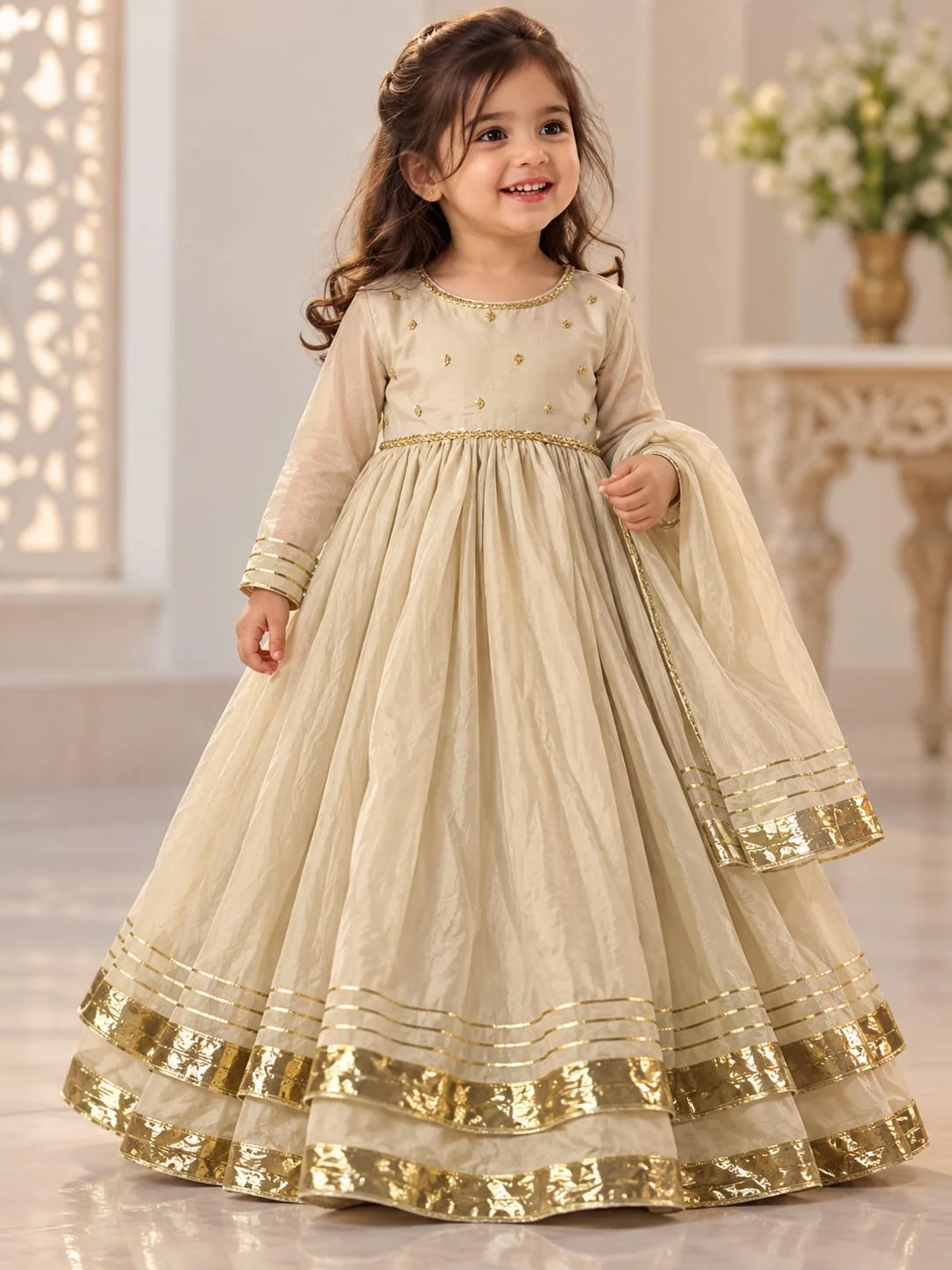
Gota is the flat metallic ribbon traditionally applied by hand in borders, scallops and geometric runs. Where heavy embroidery can overwhelm a small frame, gota gives festive shine with almost no added weight, and it is the single best way to make a plain-coloured frock look like an occasion.
Look for gota that follows the structure of the frock, along the hem, around the yoke, down the sleeve, rather than scattered across the body. Placement is what separates expensive-looking gota work from busy gota work.
The net-yoke Anarkali
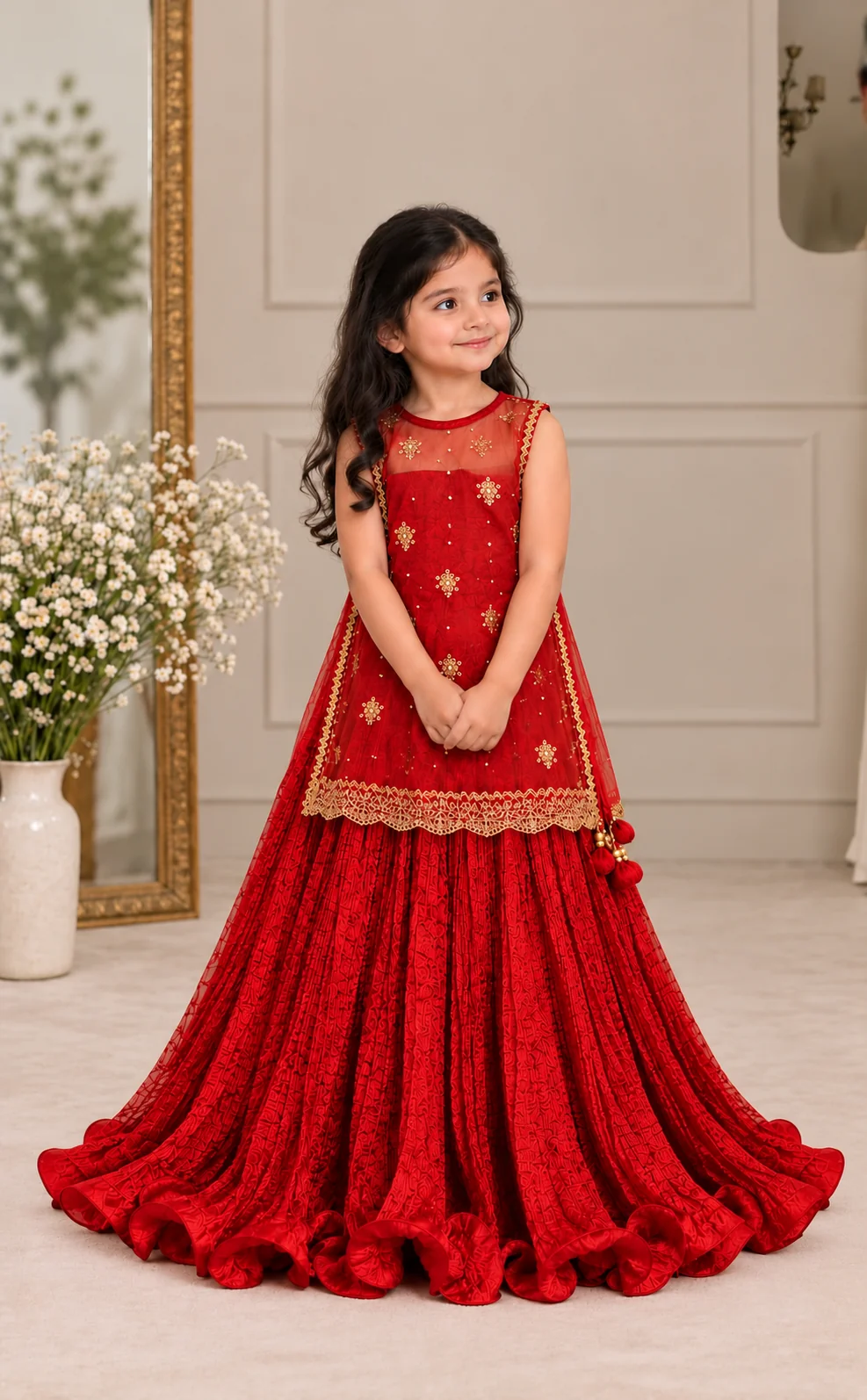
Here the upper shirt is worked in net over the base fabric, embroidered in tilla and sitara, so the work appears to float rather than sit flat against the chest. It is the dressiest of the designs and the one that reads best in evening photographs.
Check the lining of the yoke before anything else on this design. Net and metallic thread are lovely from the outside and scratchy from the inside.
The ankle-length Anarkali
Identical in cut to the full-length version but hemmed to the ankle rather than the floor. For a child under five, or for a Mehndi where she will be dancing, this is very often the better decision: it keeps the whole silhouette and removes the only real hazard a long frock carries.
The Anarkali over churidar or shalwar
The most traditional pairing of all, and the most practical for daytime. A shorter Anarkali worn over a churidar or a patiala shalwar suits Eid mornings, Nikah ceremonies and family lunches, where a floor-length gown would be more than the occasion asks for.
Fabric: what holds a flare, and what breathes
An Anarkali is mostly skirt, so the fabric is doing more work here than in any other shape. Choose it for how it falls first and how it feels second, and let the season decide between them.
Chiffon is the classic choice for a festive Anarkali and the reason the double-layer design works so well. It is light enough that a child can carry a great deal of it, and fluid enough that the flare opens properly instead of standing away from the body. In two layers it gains body without gaining weight.
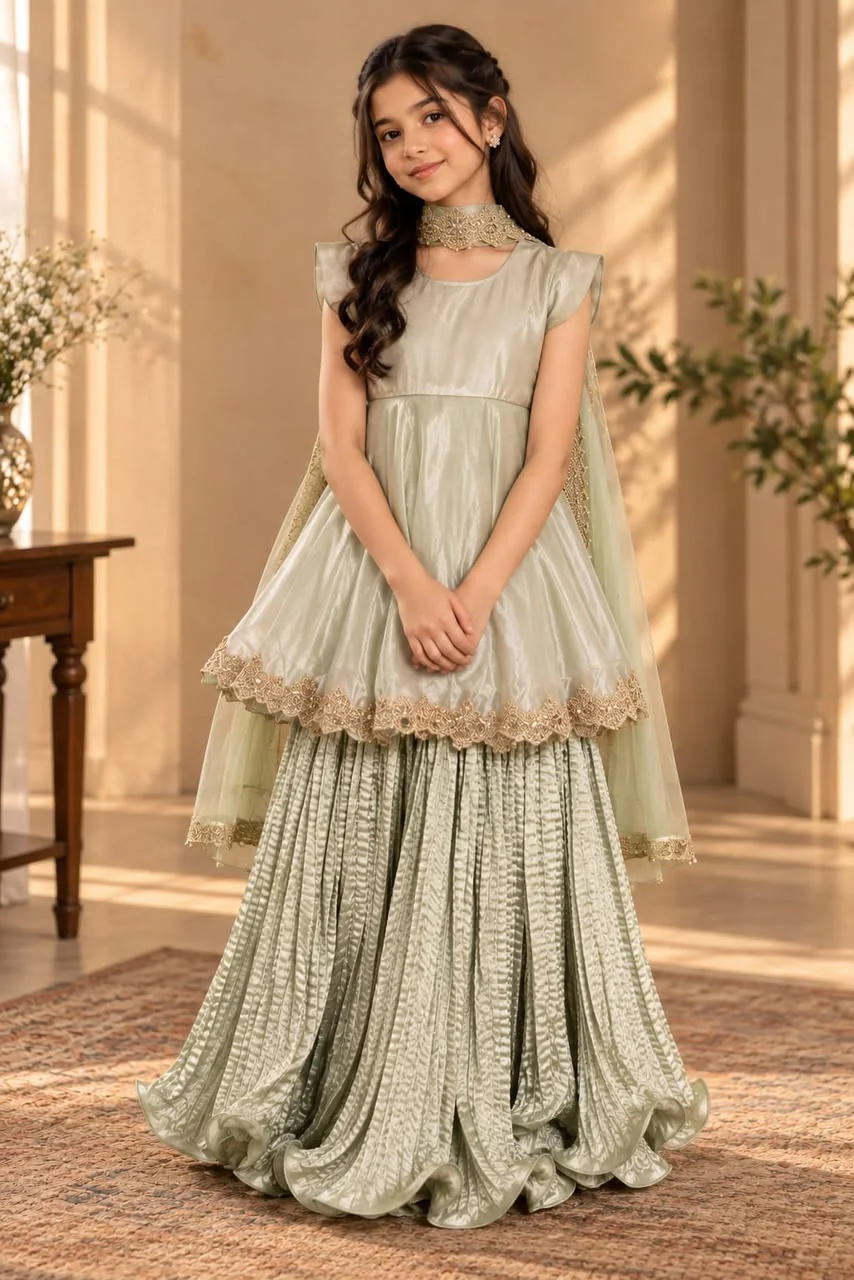
Crush silk suits winter functions and heavier evening wear. The crinkled texture holds its own volume, photographs with depth, and keeps a marquee bearable. Net over a silk or chiffon base belongs on the yoke rather than the skirt, where it lets embroidery lift. Organza adds crisp structure at a hem or a sleeve edge. Cotton and lawn Anarkalis are for daytime and summer, and a hand-embroidered lawn frock is a far more comfortable choice for an Eid morning than any synthetic festive fabric.
- Winter evening function: crush silk, or chiffon in a double layer.
- Summer or daytime: single-layer chiffon, lawn, or cotton with hand embroidery.
- For the yoke only: net with tilla and sitara work, lined on the inside.
- Avoid for children: anything heavily beaded across the skirt. It is tiring to wear and it catches.
Gota, tilla and sitara: knowing what you are looking at
Most of the price difference between two frocks that look similar in a photograph comes down to the work on them, so it is worth being able to name it.
Gota and gota patti
Flat metallic ribbon, applied by hand. Gota patti is the technique of folding and stitching that ribbon into petals, leaves and scalloped shapes. It gives a warm, traditional shine, adds very little weight, and survives a child's evening better than almost any other embellishment.
Tilla work
Metallic thread embroidery with a soft glow rather than a hard sparkle. It is the work that makes a yoke look rich in indoor light, and it is usually concentrated on the bodice because that is where the eye lands.
Sitara and sequin work
Small flat discs that catch light directly. Used sparingly across a yoke they lift the whole frock in photographs; used across a full skirt they add weight and tend to snag. A light hand is the mark of a good piece.
Hand embroidery
Thread work in florals or motifs, stitched rather than machine-run. On a daytime or lawn Anarkali this is the detail that makes a simple frock worth keeping, and it washes far better than metallic work does.
Colours that photograph well
Wedding halls are lit warm, yellow and unevenly, and a shade that looked perfect in daylight can disappear in a photograph. Match the colour to the lighting, not only to the child.
Ivory, beige and champagne are the Anarkali's natural register, and they are having a long moment for good reason: a neutral base lets gota work read clearly instead of competing with the fabric. They are at their best at a Walima, at a daytime function, or anywhere the lighting is soft.
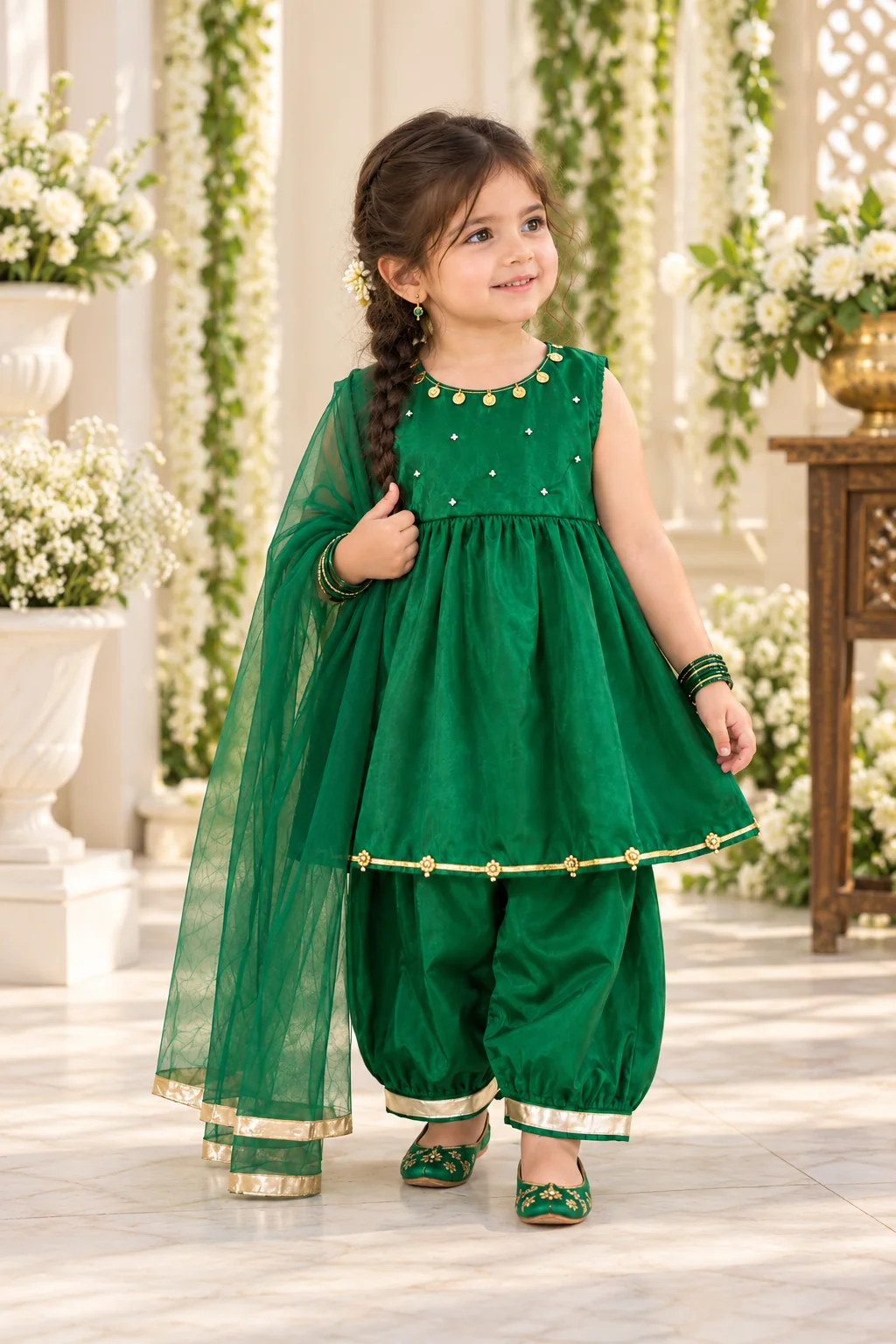
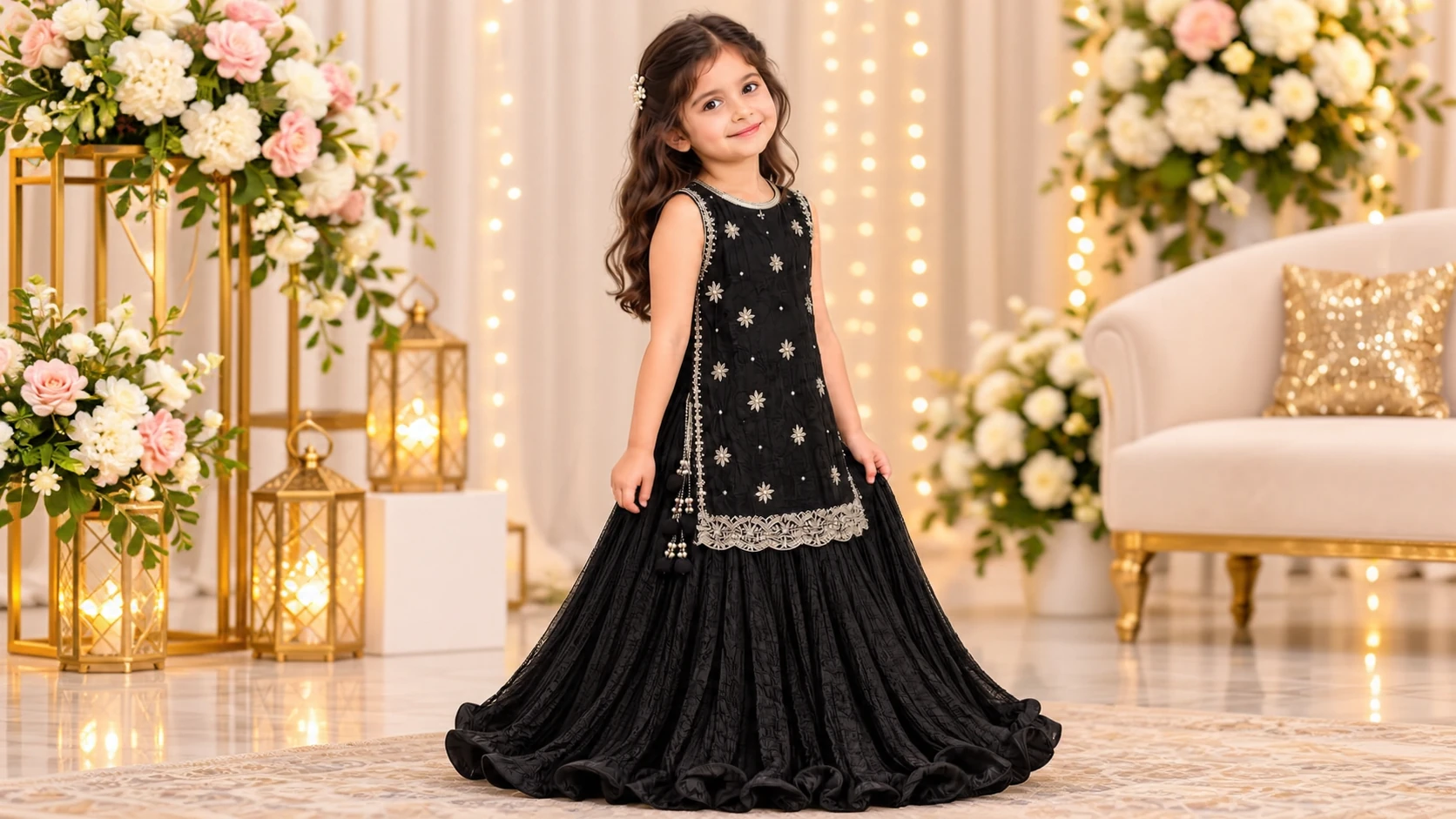
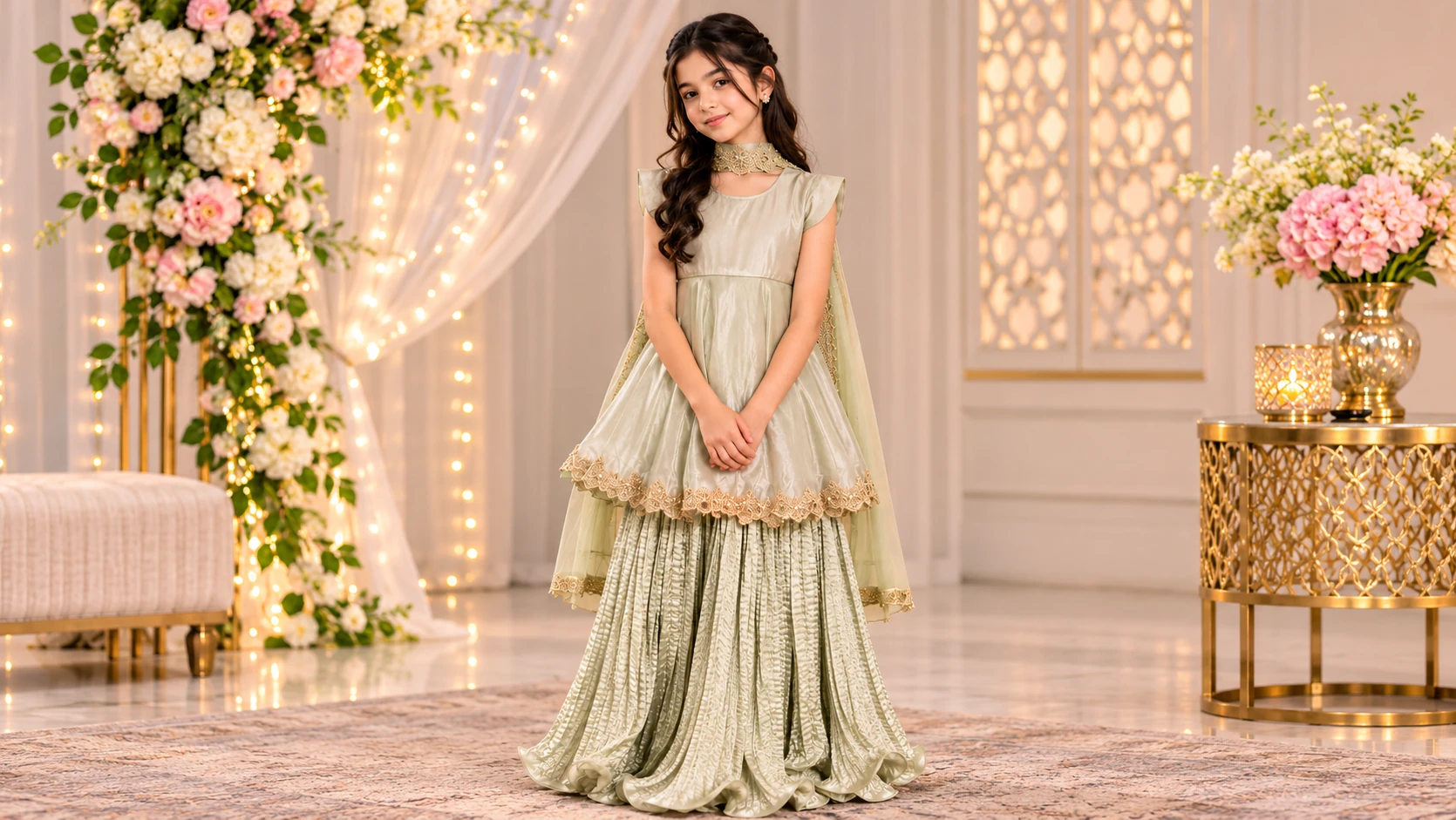
Jewel tones hold their depth under strong indoor lighting. Maroon, emerald, royal blue, magenta and black all keep their embroidery legible in evening photographs. Pastels such as blush, lavender, sage, butter yellow and mauve are lovely in daylight and can wash out under heavy yellow lighting, so take a test photograph on your phone before the day.
- Barat and evening functions: maroon, emerald, royal blue, magenta, black.
- Walima, Nikah and daytime: ivory, beige, champagne, blush, lavender, sage.
- Eid: ivory with gota, or a soft pastel with hand embroidery.
- Avoid at a Barat: deep bridal red and heavy bridal gold. Those belong to the bride.
Which Anarkali suits which occasion
The shape works almost everywhere, but the version of it should change with the event.
Barat
The most formal function of the week, and the place for a full-length Anarkali with a worked yoke in a jewel tone. Let the embroidery carry the look and keep her jewellery to one light piece.
Walima
Softer lighting, softer palette. An ivory or beige gota-worked Anarkali is close to foolproof here. It is formal enough for the occasion without the weight of a Barat outfit, and it photographs beautifully at a seated dinner.
Mehndi
The longest night and the most dancing. Choose the ankle-length version, or a lighter single-layer chiffon, and make certain the hem clears the floor properly. A floor-length hem on a crowded dance floor is a nuisance for a child.
Nikah
Usually smaller and often daytime, so a heavily embellished gown reads as too much. A plain chiffon or lightly worked Anarkali in a pale shade strikes the right note.
Eid and birthdays
An Anarkali is a genuinely good Eid choice because it is one piece and needs no fussing after the first hour. For an Eid morning, a lighter fabric over a churidar or shalwar beats a full festive gown.
Getting the size right, which is the whole game
An Anarkali has only two measurements that really matter, and age is not one of them. Children of the same age differ by several inches, and a frock ordered by age is the single most common sizing mistake we see.
For a full-length frock, stand her barefoot and upright and measure from the top of her shoulder straight down to the floor. That number decides the length. Then measure around the fullest part of her chest, keeping the tape snug but not tight; that decides the bodice. Because the flare starts above the waist, waist and hip measurements barely matter on this shape, which is part of why it fits such a range of builds.
Full-length frocks are cut to a dedicated length chart, separate from the one used for kurtas and shalwars, precisely because the shoulder-to-floor drop matters more here than anything else.
- 2Y sits at about 29 inches from shoulder to floor.
- 5Y is about 37 inches.
- 8Y is about 44 inches.
- 10Y is about 48 inches.
- 12Y is about 52 inches.
- 14Y is about 56 inches.
Styling an Anarkali without overdoing it
The frock is already doing a great deal of work. The usual mistake is to keep adding until a child looks like a miniature bride, so choose one finishing touch and stop.
A paranda braided into her hair is the most comfortable option by a wide margin. It weighs nothing, adds a properly traditional note, stays put through dancing, and will not catch on a dupatta the way heavy jhumkas do.
For the dupatta, a necklace-style drape that sits in place without pinning saves the most common complaint of the evening. If the dupatta is a loose length of net, pin it properly at the shoulder before you leave the house. For shoes, a flat or very low heel in a shade that vanishes under the hem beats anything decorative. Nobody will see them, and she will be on her feet for hours.
- One piece of jewellery, and none at all if the yoke is embroidered.
- A paranda rather than heavy earrings.
- A necklace-style dupatta, or pin it at the shoulder.
- Shoes broken in for several days beforehand.
- A safety pin and a hair tie in your bag. You will use both.
How to tell a well-made Anarkali from a photograph
Buying online means judging construction from an image and a description, which is harder but not impossible. Four things give a good frock away.
Look at how the flare falls in the photograph. A well-cut Anarkali drapes in soft vertical folds from the yoke; a poorly cut one stands away from the body in a stiff cone, which almost always means the volume is coming from lining rather than from fabric. Then look at where the embroidery sits. Structured along the yoke, hem and sleeve edge is the sign of a considered design, while work scattered evenly across the whole body usually means a print or a machine run.
In the description, check that lining is mentioned for any embroidered yoke, and check whether the dupatta is included and what it is made of. A matching gota patti dupatta is part of the outfit; a mismatched afterthought is not.
- Soft vertical folds from the yoke, not a stiff cone.
- Embroidery that follows the structure of the frock.
- Lining stated for any embroidered neckline.
- A matching dupatta described as part of the set.
- Per-size pricing rather than one price for every age, which tells you it is cut to size.
Ordering in time, and caring for it afterwards
Every frock we make is cut and stitched to order, which takes 3 to 5 working days before a courier is even involved. For a wedding or an Eid with a date already fixed, order two to three weeks ahead and tell us the date, so we can confirm honestly whether we can meet it rather than hope.
Afterwards, do not put it away dirty. Perfume and invisible marks oxidise over months into permanent yellow patches, and a chiffon frock with gota or tilla work should be dry cleaned rather than washed at home. Steam on the lowest setting to lift creases, because a hot iron flattens gota permanently, and store it folded in tissue rather than hanging, so the weight of the work does not pull the fabric out of shape.