Style guide11 min read
Best Wedding Guest Dresses for Girls
A complete guide to choosing a wedding guest dress for your little girl in Pakistan: what to wear to a Mehndi, Barat, Walima or Nikah, which silhouettes and fabrics work, the colours to avoid, and how to get the size right.
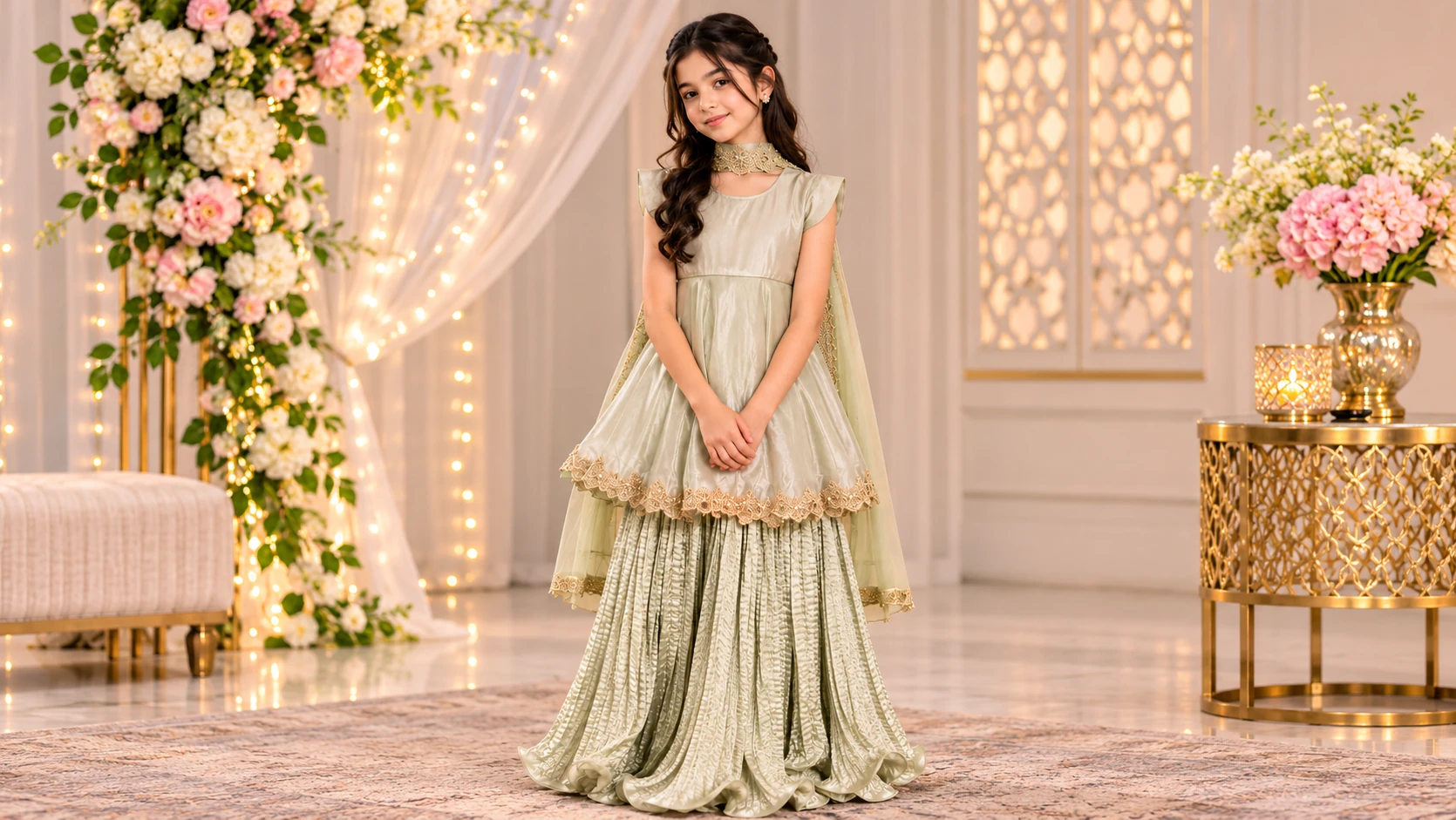
Wedding season arrives with a list: four functions, three of them in the same week, and a little girl who needs something to wear to each. Somewhere between the shopping and the mehndi you have to decide what actually suits a child at a Pakistani wedding, and what will have her tugging at a neckline by nine o'clock.
This guide is what we tell customers who message us in October asking exactly that. It covers which outfit suits which function, the silhouettes that work on children, how to choose fabric and colour, and the practical things that decide whether she enjoys the evening or endures it.
What makes a good wedding guest dress for a girl
Adults choose formal wear by how it looks. Children wear it for six hours, through dinner, dancing, and a car ride home, so the right dress has to clear two bars rather than one: it has to look like an occasion, and it has to be wearable for the length of one.
Nearly every outfit that gets described to us as a disappointment failed on the second bar, not the first. It was scratchy at the neck, too tight across the chest, so long she tripped on the stairs, or so heavy she asked to change before the food came out.
- Festive enough to stand beside the adults, without being a miniature bridal outfit.
- Soft against the skin, especially at the neckline, cuffs, and any embroidered edge.
- Cut with room to move: she will run, sit cross-legged on a stage, and dance.
- Light enough to wear all evening. Weight is the single most underrated factor.
- Easy to manage in a bathroom without an adult undoing six hooks.
Start with the function, not the dress
A Pakistani wedding is not one event, and the outfits are not interchangeable. The quickest way to narrow an impossible choice is to decide which function she is dressing for and work backwards from there.
Mehndi
The most relaxed and the most colourful of the functions, and the one where children have the best time. Yellow, green, orange, and fuchsia all belong here, as does anything with mirror work, gota, or a flared sharara that moves when she does.
Mehndi is usually the longest night and the one with the most dancing, so this is where comfort matters most. Choose the lightest outfit of the week for this function, not the heaviest.
Barat
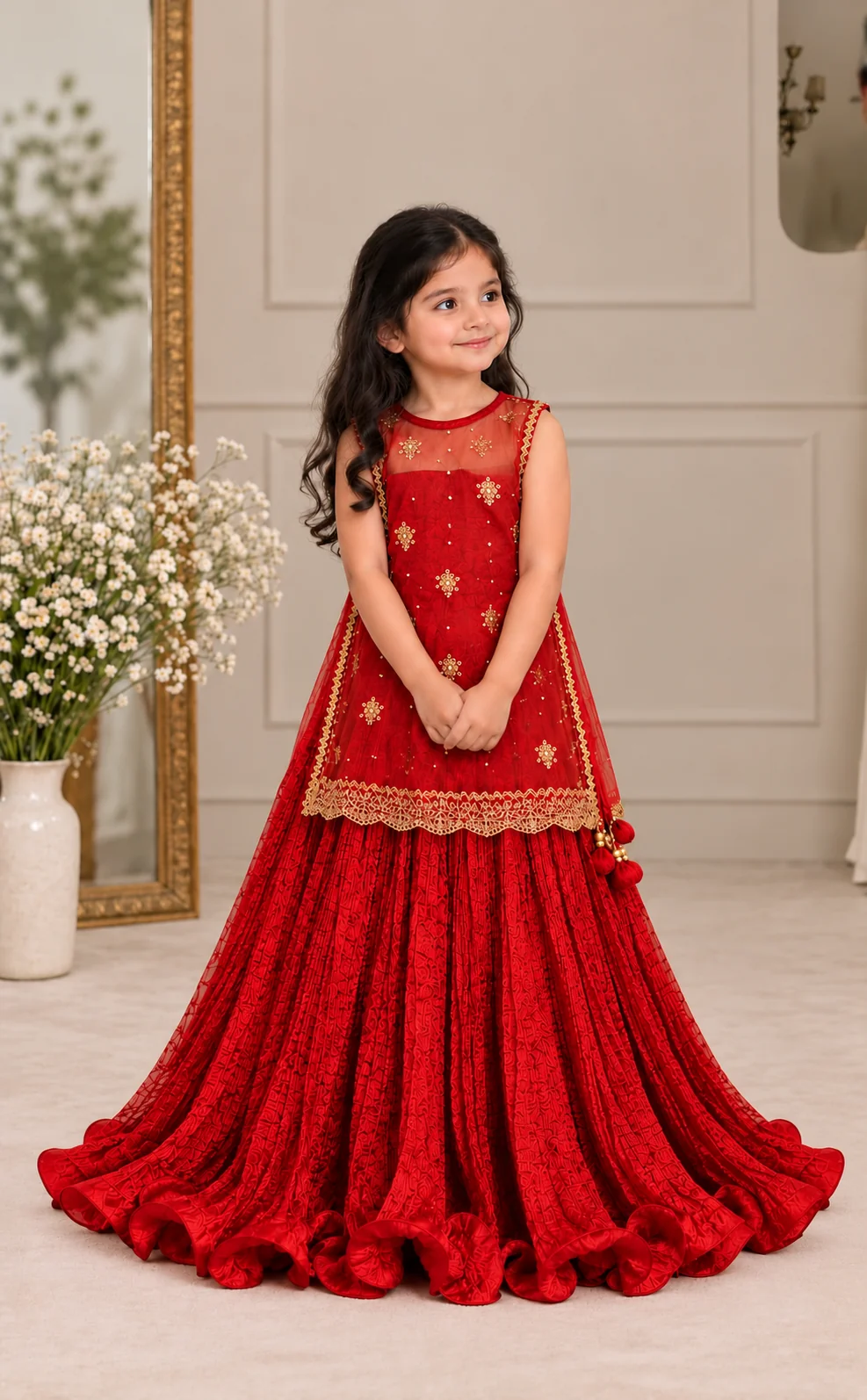
The most formal function, and the one where the bride wears red. The old rule still holds for adults and is worth following for children too: leave deep red and heavy bridal gold to the bride.
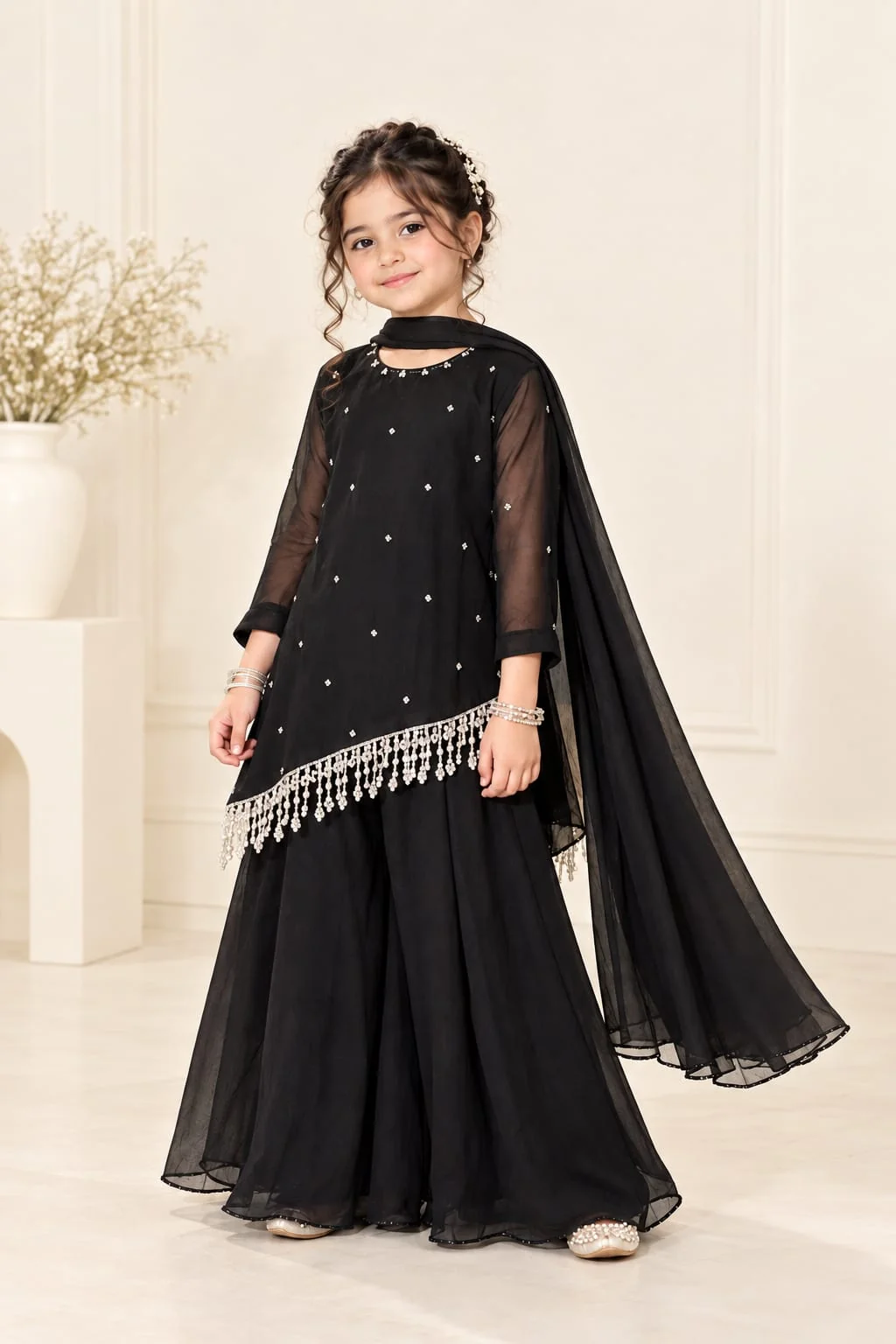
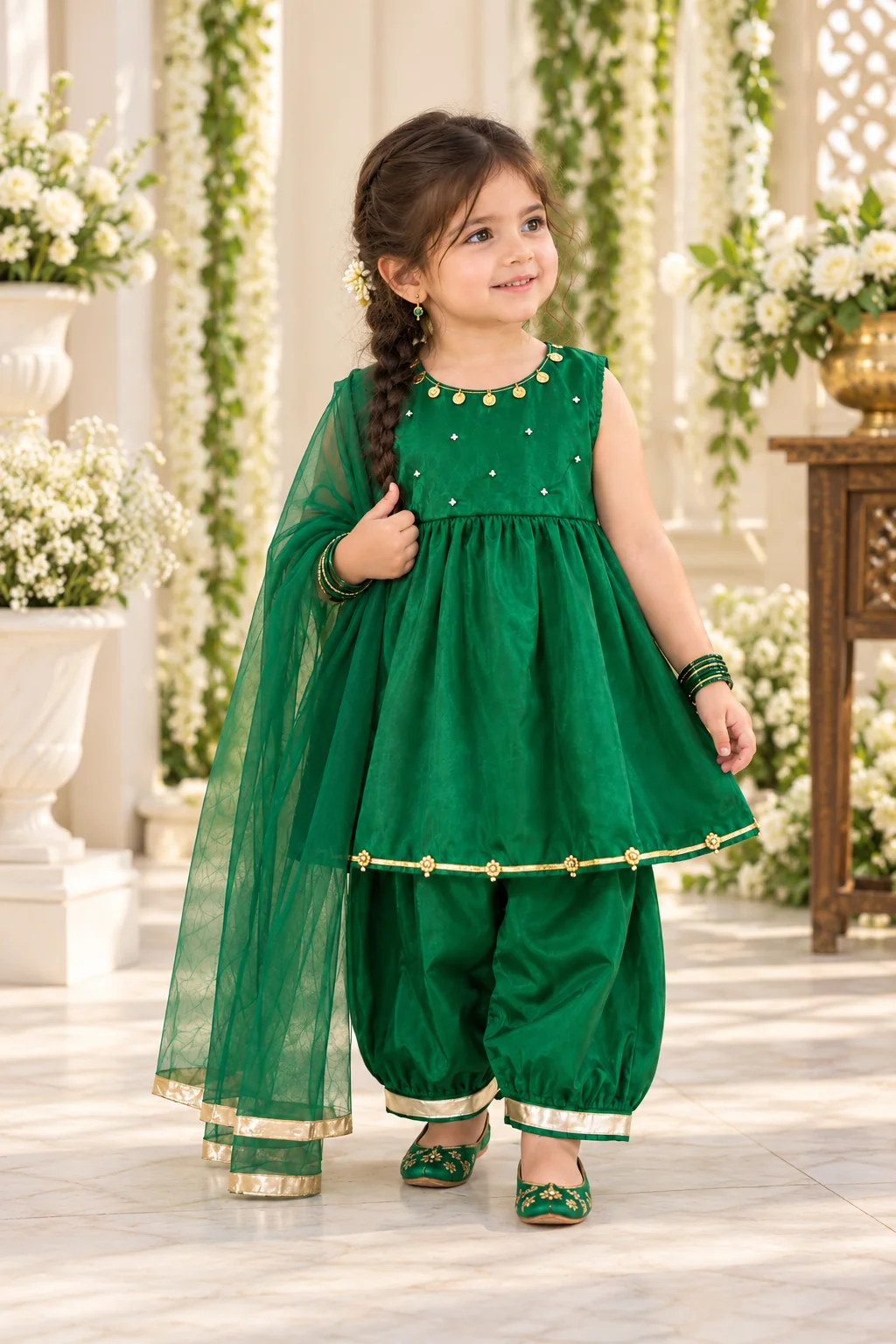
Maroon, emerald, royal blue, magenta, and black all read as formal without competing. A full-length embroidered maxi or a gharara set sits perfectly here.
Walima
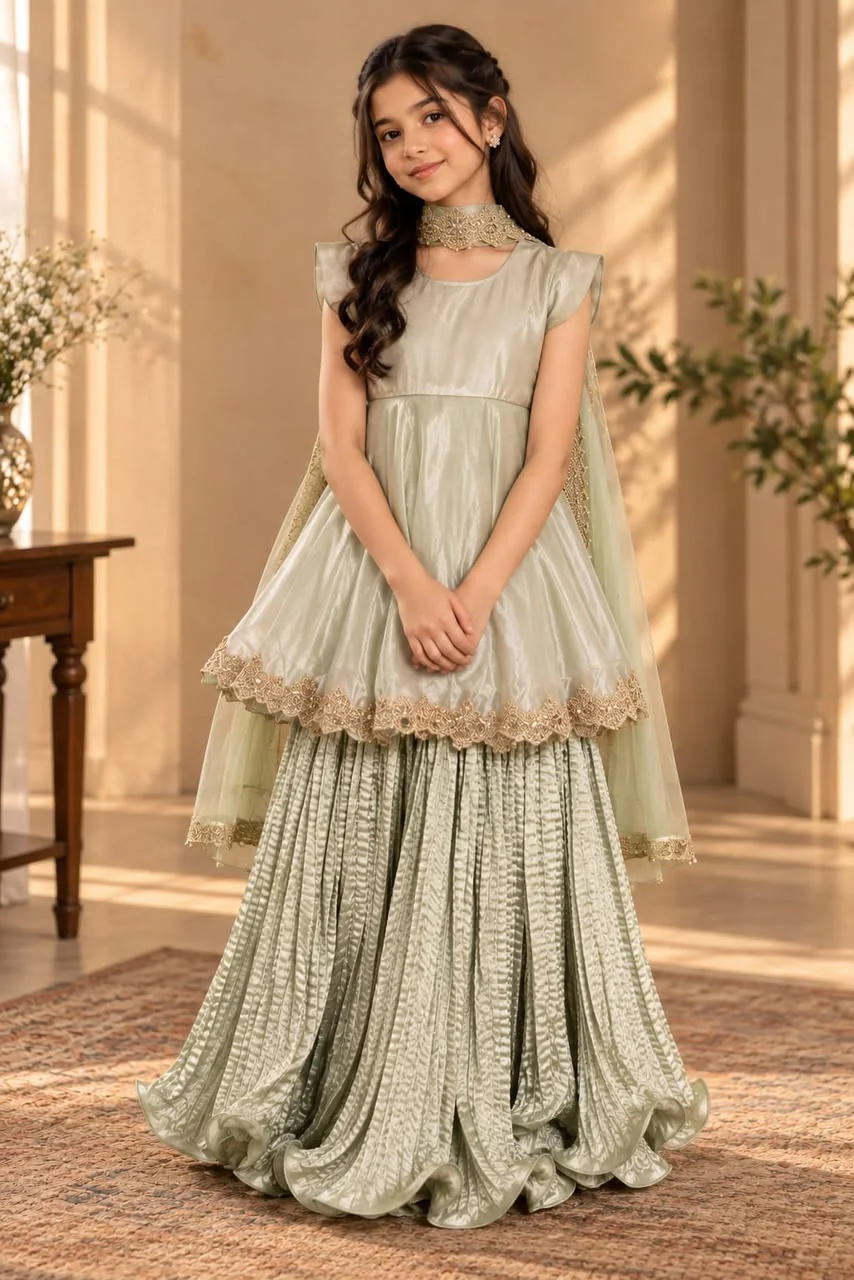
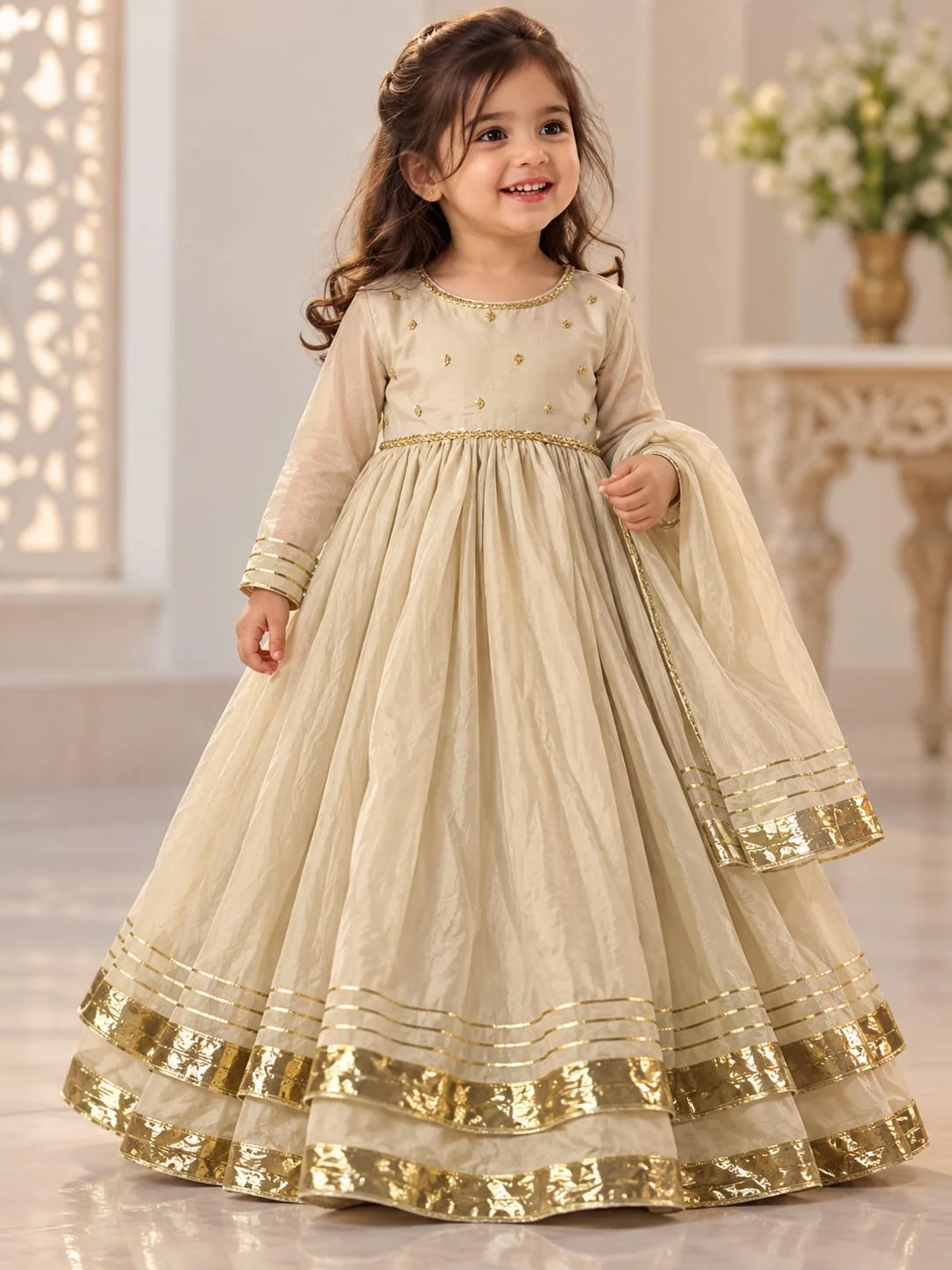
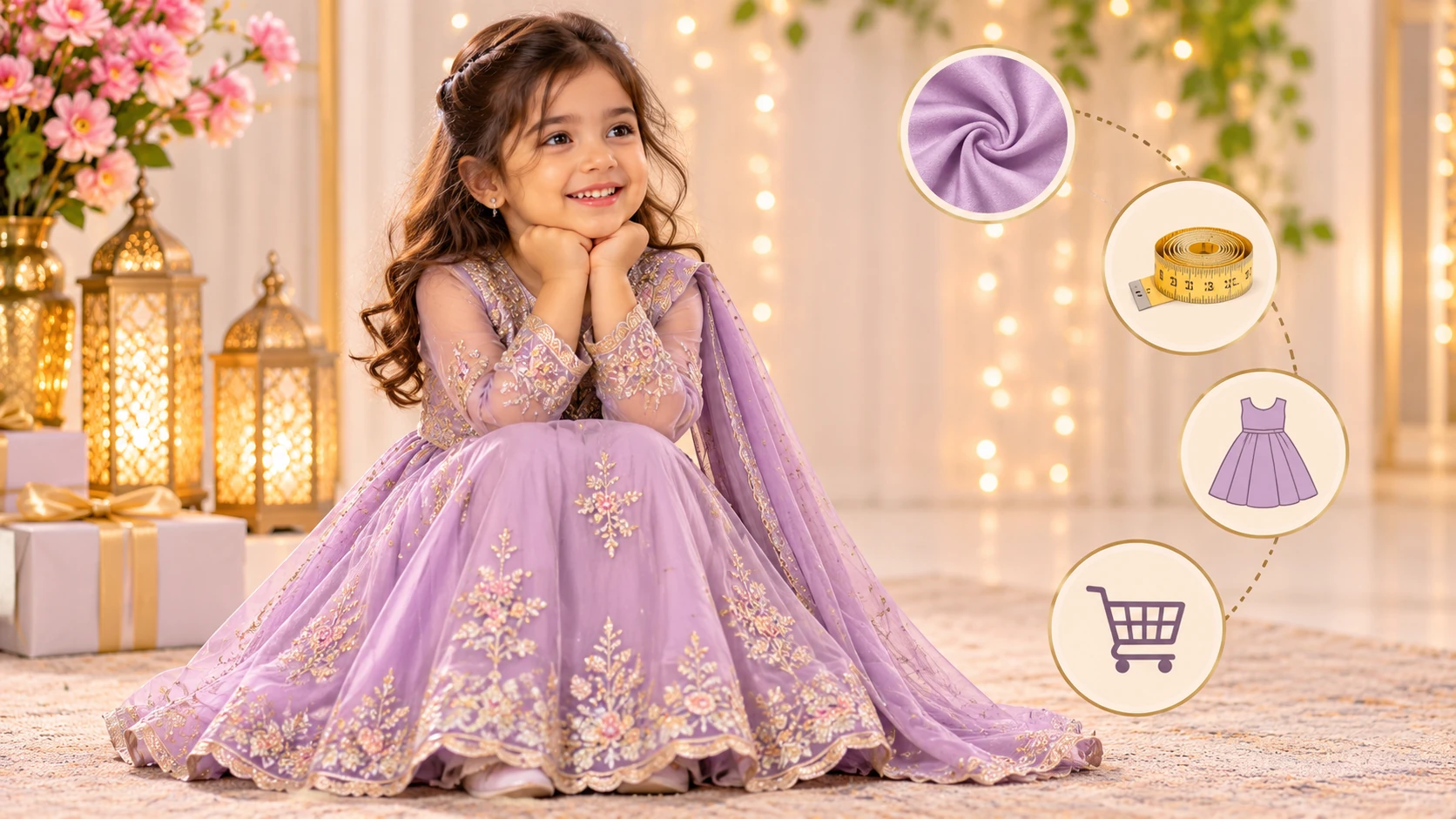
Softer and more elegant than the Barat. This is where pastels do their best work: ivory, sage green, blush pink, lavender, butter yellow, and dusty mauve.
A peplum shirt with a flared sharara, or a silk anarkali frock, is the natural choice. Walima is usually a dinner rather than a late night, so a slightly dressier, slightly heavier piece is manageable here.
Nikah & Mayun
Both are smaller, often daytime, and almost always more intimate. Keep the outfit simpler: a well-cut embroidered frock with a patiala shalwar, or a light kurta set with a dupatta, is more appropriate than a full floor-length gown.
Mayun in particular leans yellow and white, and simple is genuinely better. These are the functions where an over-dressed child looks over-dressed.
The five silhouettes that work on girls
Almost every girls' wedding outfit in Pakistan is a variation of five shapes. Knowing how each behaves on a child saves a great deal of scrolling.
The full-length maxi
The most formal option, and the one that photographs best. A heavily flared maxi in crush silk gives a child the same sweep an adult gets, and a net upper shirt with tilla and sitara work makes it unmistakably festive.
The one caution is length. Floor length on a child who is still growing into her balance means stairs and dance floors need watching. Measure shoulder-to-floor properly rather than guessing.
The lehenga set
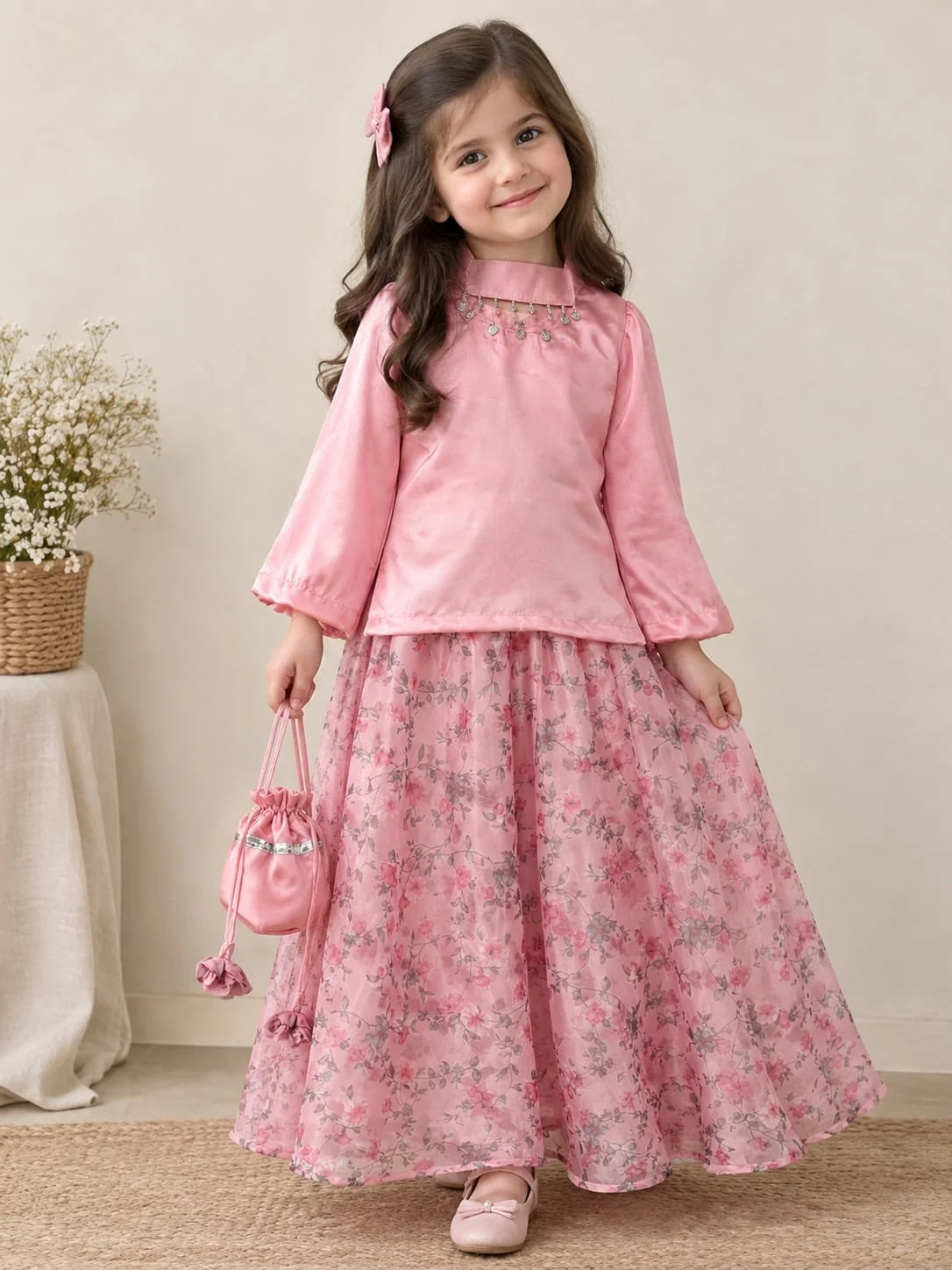
A short choli with a full skirt. It is the easiest silhouette for a child to wear because nothing restricts the legs, and the fullest skirts are the ones little girls love most.
Lehengas suit Mehndi and Mayun especially well, and a floral lehenga in a lighter fabric carries into a daytime function without looking heavy.
The sharara set
A fitted shirt with wide, flared trousers that fall from the knee. Shararas are the most comfortable formal silhouette we make, because the volume sits away from the body rather than against it.
Pair with a peplum or straight shirt. This is our most-ordered shape for wedding guests, and for good reason.
The gharara set
Similar to a sharara, but gathered at the knee so the fabric breaks and then flares. More traditional, more formal, and particularly beautiful in silk for a Barat or Walima.
Ghararas carry more fabric, so they are warmer. Think about the season before choosing one for a summer function.
The anarkali frock
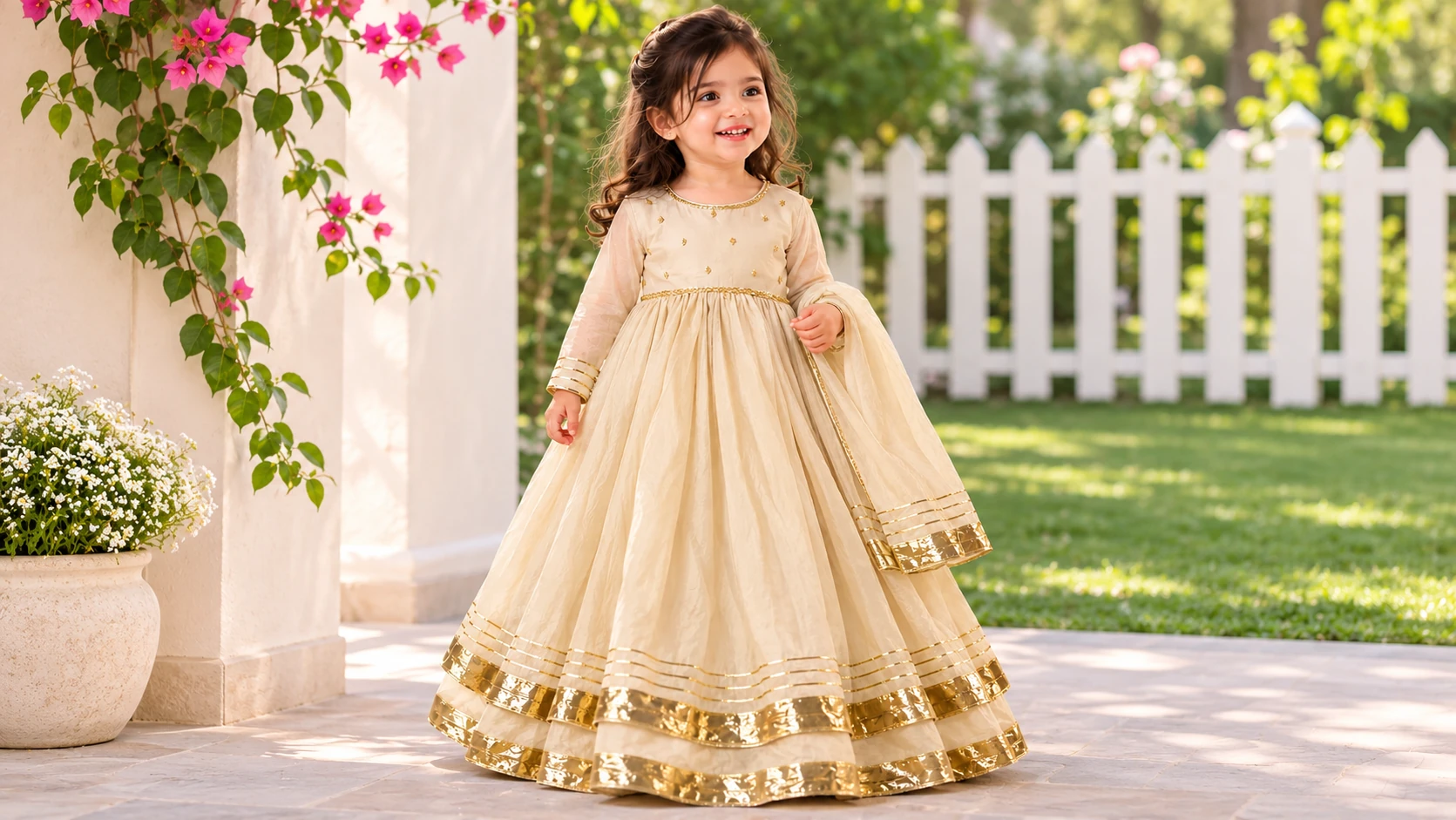
A fitted bodice flowing into a wide, gathered skirt, usually with a churidar or straight trouser underneath. It flatters every build, needs no fussing, and is the safest choice when you are buying without her there to try it on.
A gota-trimmed anarkali in ivory or a pastel is close to foolproof for a Walima or Nikah.
Choosing the fabric for the season
Pakistani wedding seasons run through both the cold and the heat, and the fabric that is perfect in December is miserable in May. This is where a lot of expensive outfits go wrong.
For winter weddings, crush silk, sheesha silk, and silk with organza all hold their shape beautifully and keep a child warm in a marquee. For summer and early autumn functions, chiffon and lighter silks breathe far better, and a net overlay adds formality without adding heat.
Whatever the season, pay attention to the lining and to the inside of the embroidery. Tilla and sitara work is lovely on the outside and rough on the inside, and an unlined embroidered yoke against a child's neck is the quickest way to end an evening early.
Colour: what works, and what to avoid
Colour at a Pakistani wedding carries meaning, and a child is not exempt from it. Two conventions are worth respecting, and the rest is open.
First, avoid deep bridal red and heavy gold at the Barat. It is the bride's colour on the bride's day, and a child in full red in the family photographs is the kind of thing that gets remembered. Second, be careful with plain white at a Barat or Mehndi; it reads as too plain at a celebration, though ivory with gota or embroidery is entirely different and always welcome at a Walima or Nikah.
Beyond that, build around the function. Jewel tones, emerald, maroon, magenta, royal blue, and black, read formal and photograph beautifully under indoor lighting. Pastels, sage green, blush, lavender, butter yellow, and mauve, suit daytime and Walima functions. Brights, yellow, orange, and fuchsia, belong at the Mehndi.
- Barat: maroon, emerald, royal blue, magenta, black. Not bridal red.
- Walima: ivory, sage green, blush pink, lavender, butter yellow, mauve.
- Mehndi: yellow, green, orange, fuchsia, and anything with mirror or gota work.
- Nikah & Mayun: soft, simple, and lighter. White and yellow sit well at a Mayun.
Getting the size right
More wedding outfits are spoiled by a bad fit than by a bad choice of dress. Children are not sized by age in any meaningful way, and a label that says 6Y tells you less than a tape measure does.
Measure her chest around the fullest part, her waist at the natural waistline, her shoulder across the back, and the length from shoulder to where you want the hem. Then match those numbers to the chart rather than to her birthday.
If she falls between two sizes and the wedding is more than a month away, take the larger one. Children grow fastest in exactly the months you are planning ahead for, and a slightly long hem is easy to live with where a tight chest is not.
The details that decide how her evening goes
These are the things nobody thinks about in the shop and everybody thinks about at the function. They cost nothing to get right.
- Check the neckline for scratchy embroidery, and for a lining that stops short of where the work starts.
- Pin the dupatta properly, or choose a necklace-style dupatta that stays put without pinning.
- Break her shoes in for a few days first. New shoes ruin more weddings for children than any dress.
- Avoid anything that needs an adult to get her in and out of it in a bathroom.
- Carry a safety pin, a hair tie, and a small packet of wipes. You will use all three.
- For a winter marquee, bring something soft to go over the outfit for the drive and the waiting.
Accessories, without overdoing it
A child's outfit is already doing a lot of work, and the common mistake is to add jewellery until she looks like a miniature bride. Pick one thing to finish the look and stop.
A paranda braided into her hair is the most comfortable option by a distance. It adds a genuinely traditional touch, weighs nothing, stays in place through dancing, and will not catch on a dupatta the way earrings and heavy jhumkas do.
Keep jewellery to one piece, either small earrings or a light bracelet. Avoid necklaces entirely if the outfit already has an embroidered yoke or a necklace-style dupatta; the two compete and neither wins.
How far ahead to order
Wedding season in Pakistan concentrates into a few months, and so does everyone's shopping. The studios that stitch by hand, ours included, are at their busiest exactly when you need them.
Order two to three weeks before the function for comfort, and at minimum ten days. That covers the 3 to 5 working days we take to cut and stitch, the courier's transit time, and the day or two you want in hand to try the outfit on and sort out shoes.
Ordering early has a second advantage. Handmade pieces are made in small batches, so a colour can simply run out. If a specific shade matters for a specific function, the safest moment to order it is when you first see it.